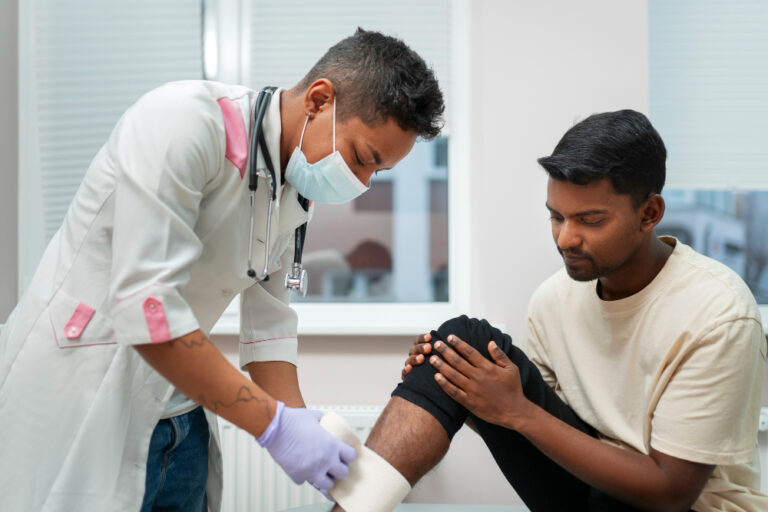
At LS Clinic, a Partial Knee Replacement is a surgical procedure where only the damaged part of the knee is replaced. Depending on the area affected, this can involve the inner part (medial), outer part (lateral), or the kneecap (patellofemoral) compartment. Unlike total knee replacement, the healthy parts of your knee are preserved, allowing more natural movement and faster recovery.
Partial knee replacement involves removing the damaged bone and cartilage in the affected area and replacing it with a prosthetic implant. The procedure is often done through smaller incisions, resulting in less post-operative pain and shorter hospital stay.
The knee joint has three compartments:
Medial tibio-femoral – inner half of the knee
Lateral tibio-femoral – outer half of the knee
Patellofemoral – front of the knee
This surgery is suitable when arthritis or cartilage damage is limited to a single compartment, most commonly the medial tibio-femoral (inner) compartment.
Pain localized to one part of the knee
Difficulty walking or climbing stairs
Limping while walking
Relief of pain with rest
X-ray: Determines the stage of arthritis, compartment involvement, bone defects, or bone overgrowth
MRI scan: Evaluates cartilage damage and checks other structures like ACL, PCL, and meniscus
Young, highly active individuals or heavy laborers
Patients with inflammatory arthritis (e.g., rheumatoid arthritis)
Severe deformity (varus >10°, valgus >5°) – total knee replacement may be a better option
Smaller incision and less post-operative pain
Less blood loss and lower cost
Faster recovery and earlier return to daily activities
Rehabilitation begins immediately. Patients can often walk with full weight on the operated leg soon after surgery. Full range of motion is usually regained within 1–2 months, depending on pre-surgery strength and flexibility. Physical therapy is recommended for up to 3 months.
For patients who wish to avoid surgery, options include:
Lifestyle modification
Exercise and physiotherapy
Anti-inflammatory medications
PRP (Platelet-Rich Plasma) therapy
Knee braces
If you experience knee pain affecting daily activities, consult an orthopedic surgeon at LS Clinic for a detailed evaluation and personalized treatment plan.