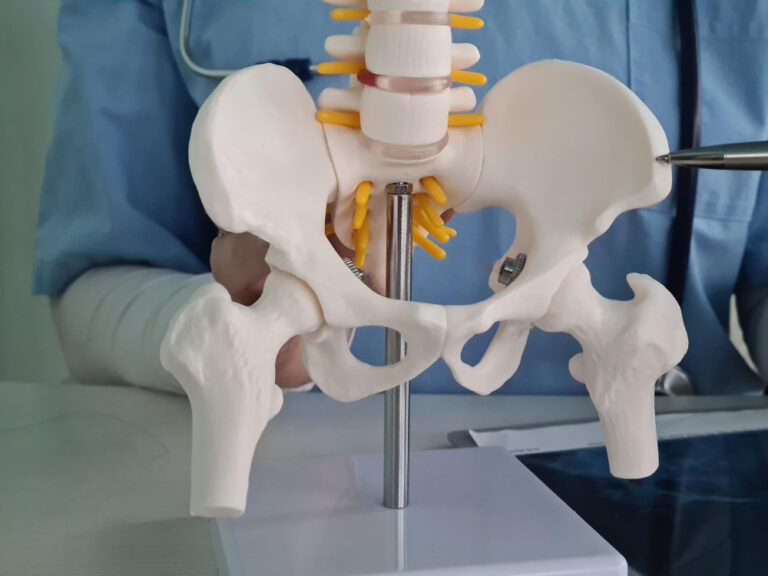
At LS Clinic, Total Hip Replacement (THR) is a surgical procedure in which a damaged or arthritic hip joint is replaced with an artificial implant. This surgery helps relieve chronic pain, restore mobility, and improve the quality of life for patients with severe hip joint problems.
During total hip replacement:
The damaged bone and cartilage of the hip joint are removed.
A prosthetic implant replaces the femoral head (ball) and acetabulum (socket).
The surrounding muscles and ligaments are preserved or adjusted to maintain stability and proper joint function.
Patients with advanced osteoarthritis or rheumatoid arthritis of the hip
Individuals with hip fractures that cannot heal with conservative treatment
People experiencing severe pain, stiffness, or limited mobility affecting daily life
Persistent hip pain, especially when walking or resting
Difficulty climbing stairs or performing daily activities
Stiffness or reduced range of motion in the hip
Hip deformity or instability
X-ray: To assess joint damage, bone quality, and alignment
MRI/CT scan: To evaluate soft tissue, cartilage, and surrounding structures
Significant pain relief
Improved mobility and daily function
Correction of deformities and leg length discrepancy
Long-lasting results with modern implants
Physical therapy begins immediately after surgery.
Patients can often walk with support within days.
Full recovery and return to normal activities typically occur within 3–6 months, depending on rehabilitation and pre-surgery condition.
If you are experiencing chronic hip pain or difficulty walking, consult an orthopedic surgeon at LS Clinic for a detailed evaluation and personalized treatment plan.